
31°C, New York


Notification products, updates
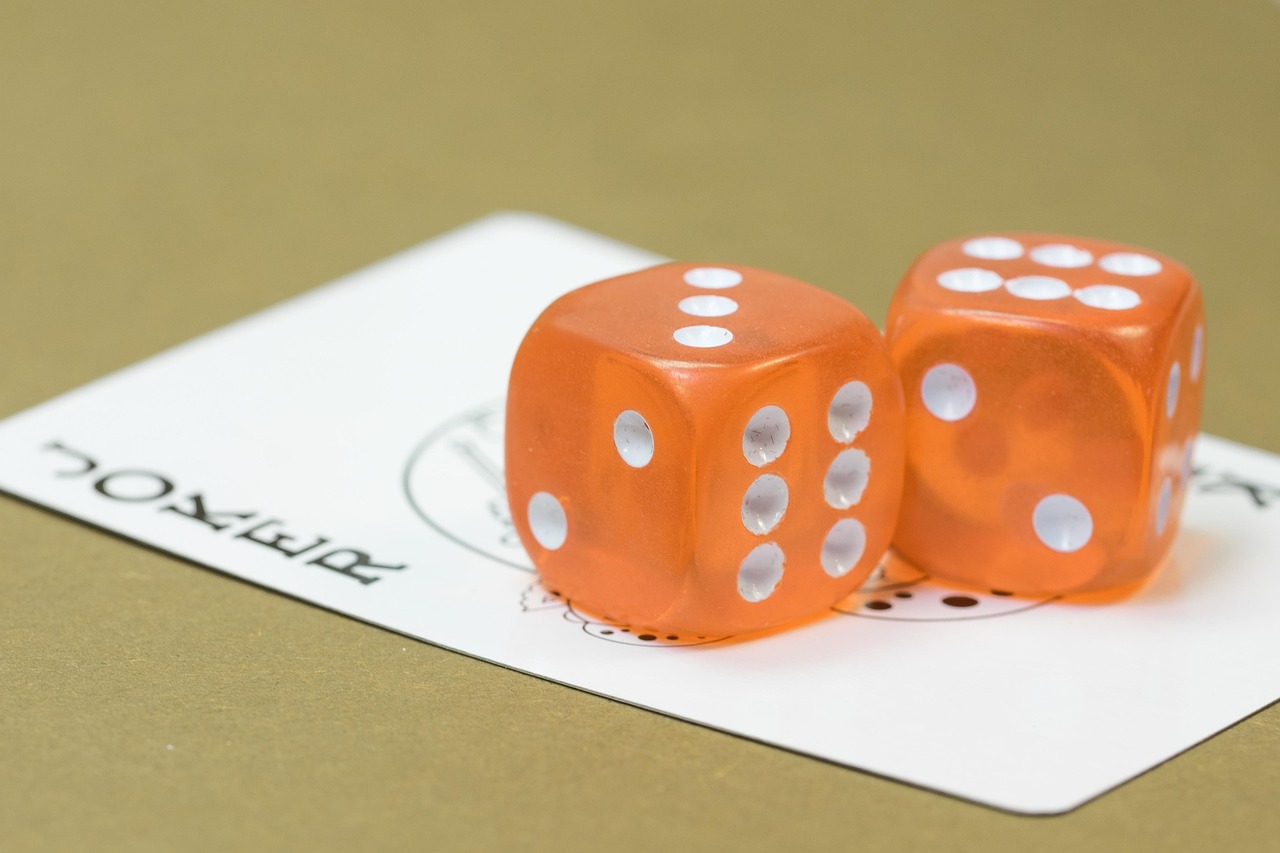
Ask ten slot players what RTP means and you'll get ten confident answers, most of them wrong. The number printed on a game's info screen—96.5%, 94%, sometimes as low as 88%—is one of the most misunderstood figures in all of iGaming. It's not a guarantee, it's not a target, and it's definitely not a prediction of your session. But it is one of the few genuinely useful pieces of information you can use to make smarter decisions. Let's unpack what it actually tells you, and where operators and regulators sometimes let the truth blur.
RTP stands for Return to Player. A 96% RTP means that, over an enormous number of spins—typically many millions—the machine is mathematically designed to pay back 96% of everything wagered, keeping 4% as the house edge. That sounds straightforward. The problem is the phrase "over an enormous number of spins."
If you play 200 spins on a $1 stake, you've wagered $200. The expected return is $192. But in practice, your result will be nowhere near that. You might walk away with $40, you might walk away with $800. The RTP converges only when the sample size becomes huge—think tens of millions of spins, which is where slot developers and testing labs like GLI and eCOGRA actually verify these figures.
A quick example helps. Two slots, both with 96% RTP. One is a low-volatility game that pays small amounts frequently. The other is a high-volatility game where 90% of the RTP is concentrated in a single 5,000x jackpot. Same RTP, wildly different experiences. Volatility—not RTP—is what determines how your bankroll breathes during a session. If this is new to you, king 88 is a sensible next read.
Here's where it gets uncomfortable. Many providers ship slots with multiple RTP configurations. A single title might exist at 96.2%, 94%, 92%, and 88%, and the casino chooses which version to license. The difference isn't cosmetic—it can shift the house edge from under 4% to over 12%.
Regulators have started to push back. The UK Gambling Commission requires the RTP to be clearly displayed in the game's help file, and the Malta Gaming Authority has similar rules. But in some jurisdictions, the version number is buried three taps deep in a menu most players never open.
This is one of the few areas where the informed player has a genuine edge. Choosing the 96% version over the 92% version isn't a magic trick—it's basic arithmetic, and over thousands of spins it makes a measurable difference to your expected loss.
Slot players fixate on RTP, but poker and sports bettors face a different beast: the rake and the vig.
In online poker, the house doesn't take a slice of every pot the way a slot does—it takes a commission. At micro-stakes cash tables, the rake is usually capped around 5% of the pot up to $3. At higher stakes, it's often 2.5% to 4% with a larger cap. That rake, taken thousands of times across thousands of hands, is the real opponent. A winning player at $1/$2 might grind out 3 big blinds per 100 hands pre-rake and still lose money after it. This is why game selection and table choice matter more than any single hand.
Sports betting has an equivalent: the overround, or vig. A fair two-way market would price both sides at +100. A typical book prices them at -110, embedding roughly a 4.5% margin. On a parlay or same-game multi, that margin compounds. A five-leg parlay at -110 each leg has an effective house edge well north of 20%.
Live dealer blackjack, roulette, and baccarat have carved out a huge share of the market, and their house edges are refreshingly honest. European roulette is 2.7%. American roulette doubles it to 5.26% thanks to the extra double-zero. Blackjack with basic strategy and favorable rules can drop under 0.5%. Baccarat's banker bet sits at 1.06% before commission.
But the wild west is crash and instant-win games. Their RTP is often in the 94% to 97% range, but the payout distribution is brutal—most rounds end near zero, and rare multipliers carry the whole return. If you play these, treat them as entertainment with a fixed budget, not as a strategy. The math is designed so the house grinds you down slowly, and there's no skill layer to compensate.
Long-time players develop habits that separate them from the crowd. None of these guarantee wins—nothing does—but they tilt the odds as far as they can reasonably go.
RTP is not a promise, and the house edge is not a scam—it's the price of admission for a product that has to make money. What matters is whether you know the price before you pay it. A player who checks RTPs, understands volatility, compares rake structures, and treats bonuses as math problems rather than free money will, over a year, lose far less than someone who spins blind. You won't beat the math long-term. But you can stop giving it free money. That's about as close to an edge as this industry offers, and it's available to anyone willing to click the little "i" button.

Garden Cove shares practical, down-to-earth guidance on coastal and small-space gardening for uk homes for readers across the UK.
Stay Tuned With Updates


Leave A Comment